
PFAS & Lead: Choosing Certified Filters
The water flowing from your tap is a modern marvel, delivered by a vast, unseen network. But this system, essential to our health and daily lives, faces a quiet challenge. For decades, we have underinvested in the pipes and plants that keep our water safe and reliable. That clear, tasteless glass of water can hide micro-quantities of lead from old plumbing or PFAS from industrial sites. These invisible contaminants persist for decades. You can’t boil them away. This PFAS & Lead: Choosing Certified Filters guide shows you how to read NSF/ANSI labels, verify certifications, and pick a pitcher or Reverse Osmosis system that is actually certified to reduce the contaminants that matter in your home (CDC; EPA 2024–2025).
This article supports the Praeparium Emergency Water Preparedness Series, including Emergency Water Preparedness , PFAS & Lead Filters, Best Stackable Water Cubes, 55-Gallon Drum Setup, and Bathtub Water Bladders.
Affiliate LInks: We fund this work through affiliate links, which are presented only after the facts—they never influence our methodology. Our goal is to give you the clarity to move from “What now?” to “Done.”
- Threat Focus: Understand PFAS & Lead Risks in Aging Pipes
- A Special Note for Renters: You Have Power, Too!
- Frequently Asked Questions: Clear Up Common Water Treatment Mistakes
- Praeparium Emergency Water Articles
- Editorial Approach — Why you can Trust our Guidance
- Other Prepping Topics by Preparium
- Sources
Threat Focus: Understand PFAS & Lead Risks in Aging Pipes
The American Society of Civil Engineers gives US water infrastructure a “C-” (ASCE 2025) reflecting aging homeland infrastructure. The consequences of this are leaking mains that waste trillions of gallons, and aging pipes that can affect water quality right at your tap.
This sounds daunting, but it’s a challenge we can meet on two fronts. The first is systemic, requiring a continued commitment to public funding for replacing older pipes and upgrading treatment plants. This is a massive opportunity to create jobs and build resilience.
The second front, however, is personal, and it’s where we can take immediate ownership. While utilities are responsible for water up to the property line, the final step is ours. Installing a certified water filter, like a NSF/ANSI 53-rated pitcher or faucet filter, is a powerful and practical step you can take today. It’s your final barrier, giving you direct control over your family’s water quality by reducing potential contaminants like lead, copper, and chlorine byproducts.
By pairing smart public investment with empowered personal action, we can collectively ensure that every glass of water is not just clean, but safe.
A Note on Our Recommendations: Our process starts with public-health standards. We fund our work through affiliate links from select retailers, which we only include after verifying a product’s certification in official directories. Buying products through our links supports our work.
Certified Protection: Match Contaminants to Proven Standards
So, where do these unwanted ingredients actually come from? Most of the time, the water leaves the treatment plant perfectly safe. The hiccups can happen on the way to your faucet.
In many older neighborhoods, the pipes themselves,specifically legacy lead lines or solder used before 1986, can be a source of lead. Think of it like an old-fashioned tea bag steeping in your water. As water sits in these pipes, tiny amounts of material can dissolve into it.
Then there are more modern contaminants like PFAS (nicknamed “forever chemicals” because they stick around). These don’t come from the pipes but from past industrial use, and they can seep into water sources. In fact, a recent EPA study found measurable levels of PFAS in nearly half of U.S. taps, which highlights how widespread this challenge is.
But here’s the good news: knowing exactly what we’re up against is the first step to solving it! We’re not in the dark. This knowledge empowers us to take simple, effective actions to ensure the water in our own homes is as pure as can be.
| Contaminant | Health Concern | Effective Certified Systems | Standard |
|---|---|---|---|
| Lead (Pb) | Neurological / developmental harm | Carbon Block or Reverse Osmosis (NSF 53 or 58) | NSF/ANSI 53 / 58 |
| PFAS (PFOA, PFOS, GenX) | Carcinogenic, endocrine disruption | Granular Activated Carbon or Reverse Osmosis (NSF 53, 58, 401) | NSF/ANSI 53 / 58 / 401 |
| Microbes | Acute GI infection | Boil or micro-barrier filter (NSF P231) | NSF P231 |
Certification numbers are the only proof that a filter’s claim has been lab-validated to EPA/NSF criteria. In older buildings, that proof is your safeguard against invisible plumbing issues.
Know Your Home: Identify Risks in Minutes
Feeling unsure about your water doesn’t have to mean expensive tests or confusion right out of the gate. The best investigation starts with a few simple, often free, steps that can give you a clear picture.
Step 1: The 5-Minute Phone Call (Your Water’s Annual Report Card)
Think of your water utility’s Consumer Confidence Report (CCR) as your water’s annual check-up. Every U.S. utility must publish this and send it to customers. It lists the levels of key substances, including lead and PFAS, found at the community level. A quick call to your city’s Public Works or Water Quality Division to ask for the latest copy is the fastest way to understand what’s in the water before it gets to your house.
Step 2: Know Your Home’s Pipes & Test Your Tap
The CCR tells you about the public mains, but your home’s plumbing is the final chapter. Here’s how to read it:
- The Lead Pipe Inventory: A nationwide effort is underway to create address-specific maps of lead service lines under new federal rules. It’s absolutely worth asking your utility if they have this information for your home yet. You might be pleasantly surprised to learn your line is modern, or you’ll get on their priority list for replacement.
- The PFAS Test: For this modern contaminant, testing is key. Some states offer free or subsidized test kits. If yours doesn’t, using a state-certified lab (costing between $250–$400) is the gold standard for accurate results.
- Your Free Helpline: Feel overwhelmed? The EPA’s Safe Drinking Water Hotline (1-800-426-4791) is a fantastic, free resource. Their experts can help you understand your CCR, find a certified lab, and answer your questions.
A Special Note for Renters: You Have Power, Too!
Your landlord might not be able to replace the building’s pipes, but you can still use a certified water filter. Installing a non-permanent faucet filter or using an NSF-listed pitcher is a great way to take immediate control of your water quality at the point of use.
In short: Your CCR shows you what’s in the water mains; testing your tap reveals the final story that your home’s plumbing adds. Together, they give you the complete picture you need to make confident, informed choices for your household.
Certification Decoded: Spot Real Listings vs Marketing
Here’s an insider tip that can make all the difference when you are looking for a filter.
Don’t just trust the box when it has a sticker that says “Tested to NSF 53.” That wording can sometimes be a marketing sleight of hand, implying a standard that wasn’t fully met.
The real gold standard is independent verification. This means a reputable third party, like NSF, WQA, IAPMO, or UL, hasn’t just taken the manufacturer’s word for it. They’ve actually audited the factory, and rigorously tested the filters to confirm they perform exactly as promised.
You can check the certifications a filter has online on the websites of NSF, WQA, IAPMO, or UL, and search for the exact model number or SKU. Seeing it officially listed there is your green light—it’s your guarantee that your investment is truly doing the important job of protecting your home.
| Box Phrase | Meaning | Pass/Fail |
|---|---|---|
| “NSF/ANSI 53 Certified by NSF” | Full certification + factory audits | Pass |
| “Tested to NSF 53 standards” | Private lab report only | ❌ Fail until certification is verified |
| “Meets EPA guidelines” | Misleading – EPA does not certify filters | ❌ Fail |
Reverse Osmosis vs Carbon: Choose the System That Fits Your Tap
Choosing between a Reverse Osmosis (RO) system and a carbon filter isn’t about which is “better,” it’s about which is right for your water. The key is to look beyond marketing and understand exactly what each is certified to remove.
The Critical Difference: It’s All in the Certification
Many filters are certified to NSF 42, which covers taste and odor (like chlorine). This is a non-health-related standard and does not suggest that the filter will remove contaminants. To reduce specific contaminants, you should look for certification under stricter standards like NSF 53 (for lead, PFAS, etc.) or NSF 58 (for RO systems).
Here’s a quick guide to how two common types stack up:
| System | Key Certifications to Look For | What It’s Best At | Perfect For… |
|---|---|---|---|
| Reverse Osmosis (RO) | NSF 58 (System), NSF 53 (Carbon Post-filter) | Removes a very wide range of contaminants, including PFAS, lead, arsenic, and dissolved solids. | Households dealing with known PFAS, lead service lines, or a wide array of well water contaminants. |
| Carbon Block Filter | NSF 53 (Health), NSF 401 (Emerging Compounds) | Excellent at improving taste and reducing many common contaminants like chlorine, VOCs, and some PFAS. | Renters or those on a budget who need an effective, easy-to-install solution for general water quality improvement. |
Your Action Plan:
- If your water utility’s report shows PFAS or lead spikes, or if you have a well, invest in a certified RO system. It’s the most comprehensive solution.
- If you’re primarily concerned with taste and common chemicals, a high-quality NSF 53-certified carbon filter (pitcher or under-sink) is a fantastic and affordable choice.
- Always verify the model number in the online directories of NSF or the Water Quality Association (WQA) to confirm its specific, certified capabilities.
A Quick Word on Maintenance:
Think of a filter like a sponge—it eventually fills up. RO systems need membrane and pre-filter changes. Carbon pitchers need cartridge replacements. Sticking to the schedule is what keeps your water truly protected. It’s a small, predictable task for a big, ongoing peace of mind.
Top Picks: Filters with Verified Certifications
When you’re looking at water filters, it’s easy to see a certification like “NSF 53” and assume you’re fully protected. But the most important lesson in water filtration is this: certifications are highly specific to individual contaminants.
Think of it like a medication. “NSF 53” is the general category of “pain reliever,” but you need to check the active ingredients to see if it’s for a headache or muscle aches. A filter might be certified for lead reduction but not for PFAS, and vice-versa.
That’s why the most valuable filters are the ones that are “dual-listed”—they have the proven, independently verified capability to tackle both the classic and the contemporary threats in your water.
Certified Water Filters: Verified Contaminant Reduction
| Product | Type | Verified Reductions | Certification / Notes |
|---|---|---|---|
| AquaTru Carafe Countertop Water Purifier | Countertop Reverse Osmosis (RO) | Lead, PFAS, arsenic, TDS | NSF/ANSI 58 for RO performance; NSF/ANSI 53; model-specific PFAS reduction confirmed via AquaTru certification listings. |
| Bluevua UV Countertop Water Filter | Countertop RO | Lead, PFAS & broad chemical reduction | NSF/ANSI 58 system certification (manufacturer-confirmed). Compact RO alternative for renters. |
| Waterdrop G3P800 RO | Under-sink RO | Lead, PFAS, arsenic, TDS | NSF/ANSI 58 for RO; NSF 372 for lead-free materials; smart monitor assists maintenance accuracy. |
| Brita Elite Pitcher | Carbon Pitcher | Lead | NSF/ANSI 53 for lead. No certified PFAS reduction (lab tests only on some variants). |
| ZeroWater Z-Series | Ion-exchange Pitcher | Lead | NSF/ANSI 53 PFAS certification. |
If your primary concern is improving taste and reducing a contaminant like lead, a certified pitcher is a great, affordable step. However, if your local water report indicates PFAS or you simply want the highest, most comprehensive level of protection, a Reverse Osmosis system like AquaTru or Waterdrop, with its dual-listing for both lead and PFAS, is the verified gold standard. It’s the closest you can get to guaranteed purity from a single system.
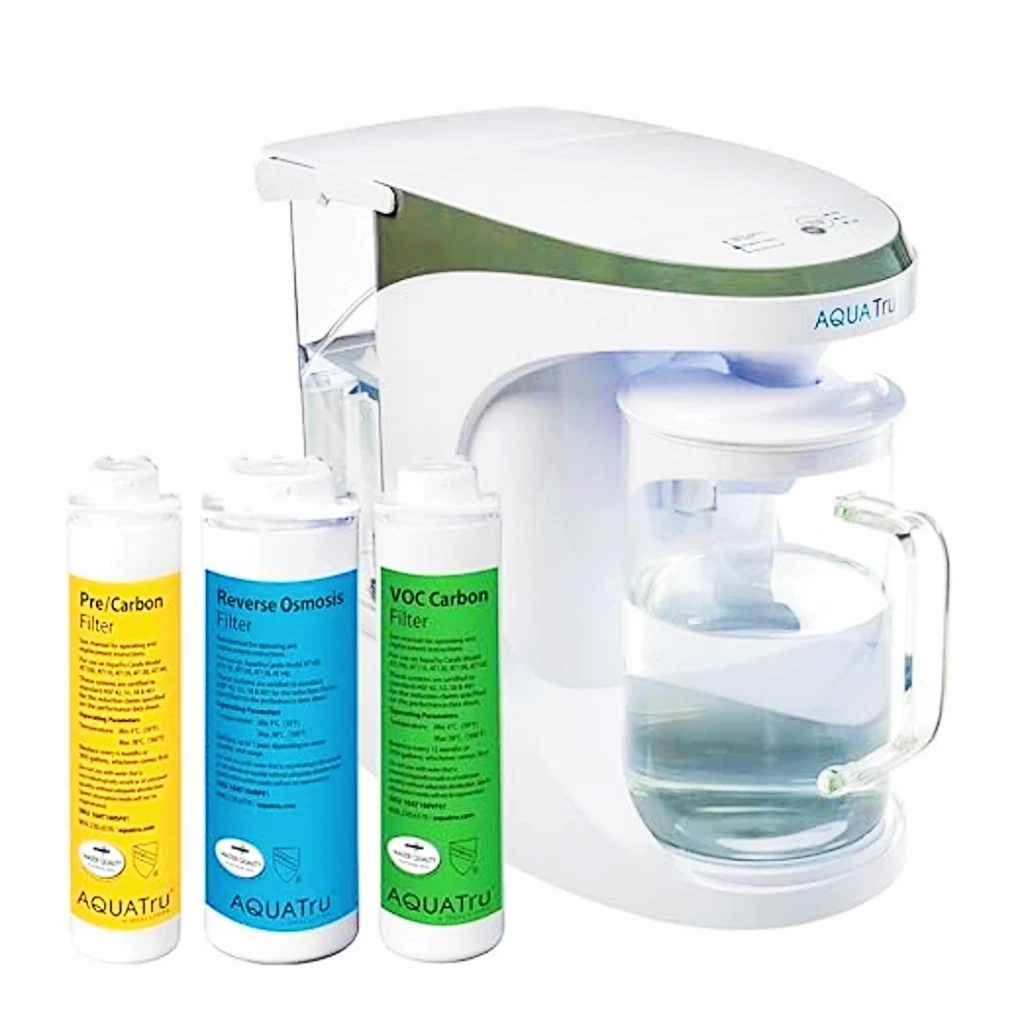
AquaTru Carafe Countertop Water Purifier
This countertop water purifier is IAMPO certified to NSF standards, removing 84 contaminants including PFOA/PFOS, lead, and microplastics. Its 4-stage reverse osmosis filtration ensures pure, great-tasting water, collected in a 64oz glass carafe. Compact and efficient, it’s an eco-friendly alternative—each filter set replaces 4,500 plastic bottles. Made with BPA-free materials, its filters are long-lasting (6 months to 2 years) and feature tool-free replacement for simple maintenance, providing families with a cost-effective and reliable source of clean drinking water.
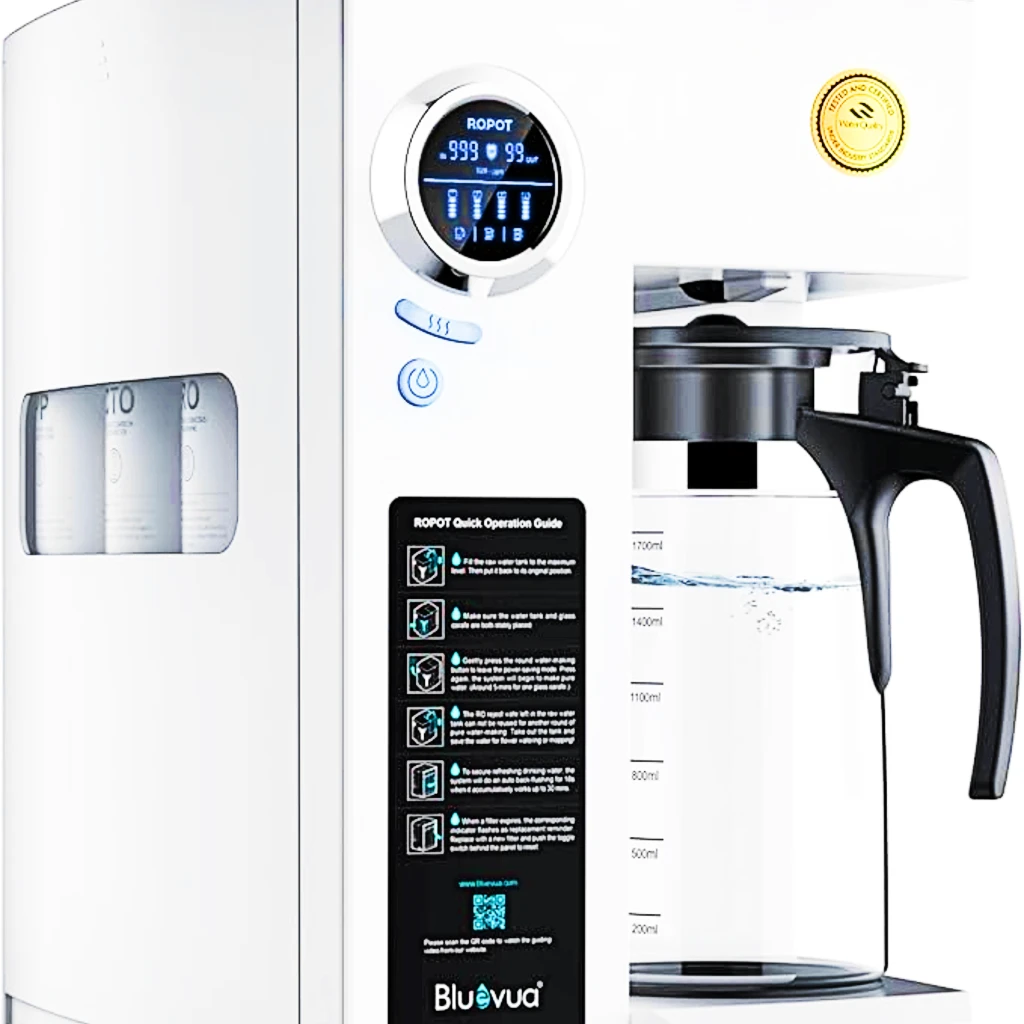
Bluevua UV Reverse Osmosis System Countertop Water Filter
The Bluevua UV is a countertop reverse osmosis system requiring no installation. Its 6-stage process, including a 0.0001μm RO membrane and UV light, is WQA certified to reduce lead, PFAS, and other contaminants, while a remineralization filter adds healthy minerals. It features a glass carafe to prevent plastic pollution, a filter life monitor, and an eco-friendly 2:1 pure-to-drain ratio. With filters lasting 1-2 years, it provides a sustainable, portable solution for producing high-quality, great-tasting drinking water directly from your countertop.
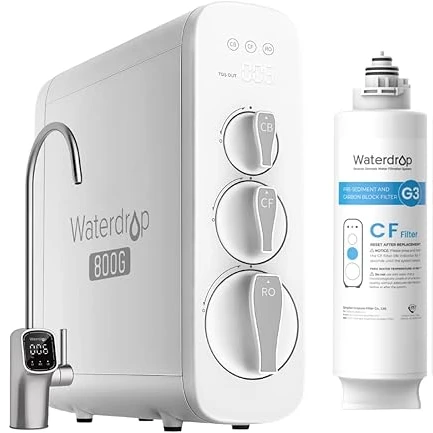
Waterdrop X12 Reverse Osmosis System
This under-sink reverse osmosis system is IAPMO R&T certified to NSF/ANSI standards for rigorous purification. Its 1200 gallons per day, tankless design provides fast, high-volume family use. The 11-stage filtration, including a 0.0001μm RO membrane, is tested to reduce PFAS, lead, chlorine, and more. It features a smart faucet showing total dissolved solids and filter life, and an alkaline mineral filter to adjust pH. With a 3:1 pure-to-drain ratio and 24-month filter life, it offers an efficient, eco-conscious water solution for healthy, great-tasting hydration directly from your tap.
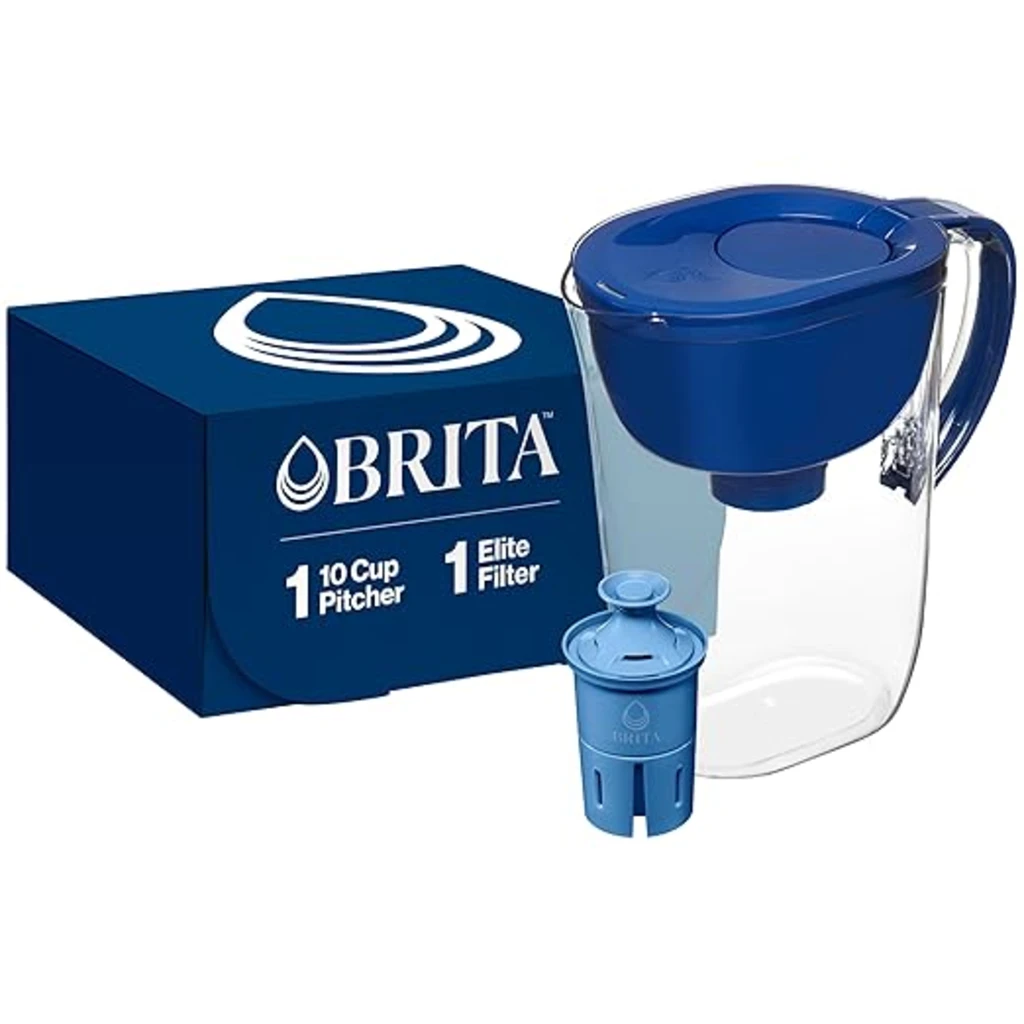
Brita Everyday Elite Water Filter Pitcher
This Brita Elite water pitcher is BPA-free and space-efficient, fitting easily in most fridges. It holds 10 cups of water and features an easy-fill lid. The filter reduces 99% of lead, chlorine, and other contaminants and includes an electronic indicator for reminders. It is compatible with most Brita products. By switching to this pitcher, you can save money and replace 1,800 single-use plastic bottles per year. The filter should be replaced every six months.
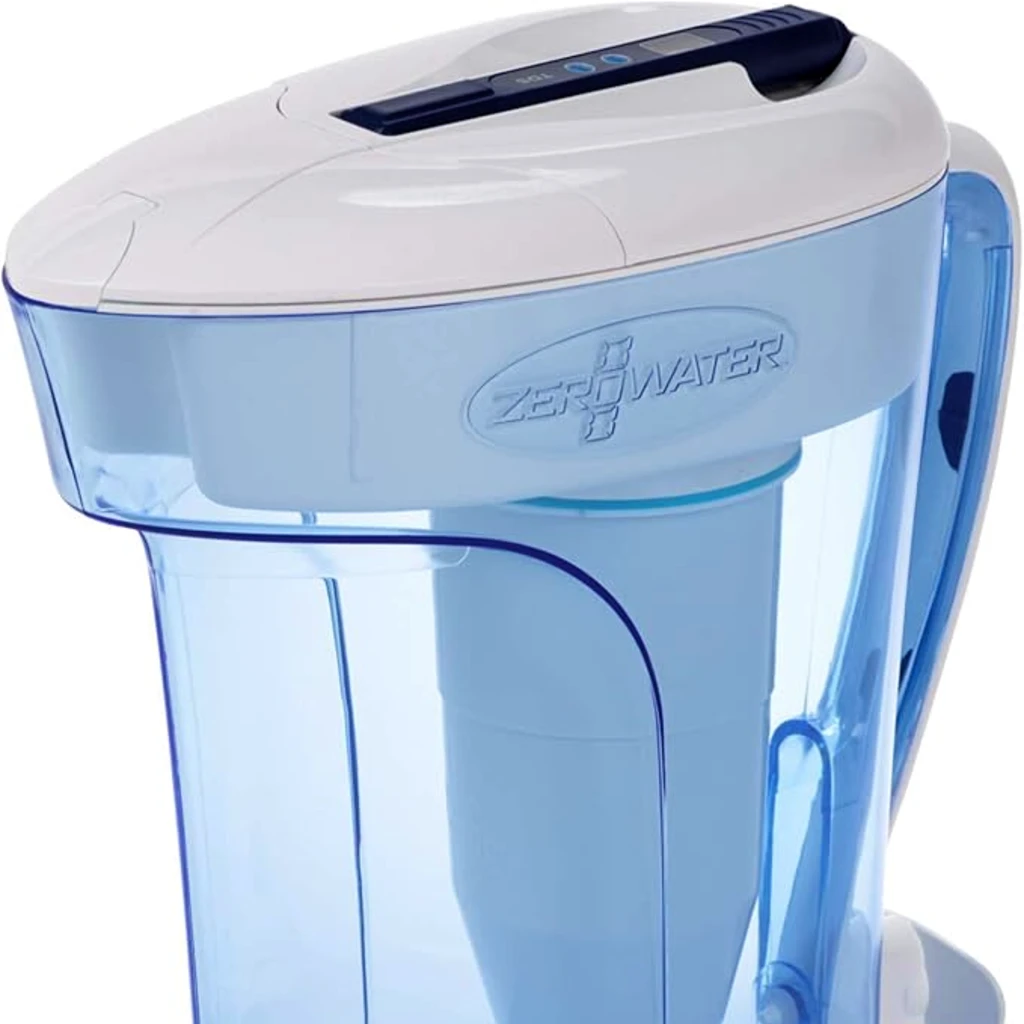
ZeroWater 12-Cup Water Filter Pitcher
This 12-cup water pitcher features a push-to-dispense spigot and includes three filters. It is certified to remove up to 99.6% of total dissolved solids (TDS), including lead, chromium, and PFOA/PFOS. Made from BPA-free materials, it uses a 5-stage filtration process for pure-tasting water. A free TDS meter is included to monitor purity and indicate filter changes. By replacing filters, you can save approximately 660 single-use plastic bottles annually, making it an eco-friendly choice for reducing waste.
Frequently Asked Questions: Clear Up Common Water Treatment Mistakes
How often should I replace filters?
Follow the shorter interval between the manual and six months for heavy use. Deterioration can occur before taste changes (EPA 2025).
Can I combine Reverse Osmosis and carbon filters?
Yes. A carbon prefilter is useful and protects the Reverse Osmosis membrane and improves taste, just ensure each stage is NSF-listed and certified.
I can’t store a gallon per person per day — what now?
Build gradually. Every quart adds resilience. See our hub Emergency Water Preparedness (2025) for ladder-based planning.
Praeparium Emergency Water Articles
55-Gallon Drum Setup (2025): Safe Bulk Storage for Households
PFAS & Lead: Choosing Certified Filters

Emergency Water Treatment (2025): Store, Treat, Filter
Best Stackable Water Cubes for Small Spaces (2025)
Bathtub Water Bladders for Short-Notice Events (2025)
Emergency Water Preparedness (2025)

Editorial Approach — Why you can Trust our Guidance
Praeparium’s Water Preparedness Editors bring together technical research, field experience, and standards-based evaluation to deliver clear, practical, and trustworthy guidance. Our team reviews water storage containers, filtration systems, chemical treatments, and emergency protocols using authoritative sources including CDC, EPA, FEMA, WHO, and NSF/ANSI performance standards.
We focus on real-world usability: how much water households actually need, how containers perform under long-term storage, how filters behave across microplastics and protozoa, and how treatment options compare under stress conditions. Recommendations are selected independently; we do not accept payment, samples, or placement fees from manufacturers. Every pick must meet transparent criteria for safety, reliability, and value.
Praeparium’s water editors are committed to responsible preparedness: mainstream, non-alarmist, evidence-led, and tailored to help families build resilience one safe step at a time.
Other Prepping Topics by Preparium
Emergency Water Preparedness (2025)
Sources
American Society of Civil Engineers (ASCE). 2021. 2021 Report Card for America’s Infrastructure. Reston, VA: American Society of Civil Engineers. https://doi.org/10.1061/9780784484654
Centers for Disease Control and Prevention (CDC). 2024. Boil Water Advisories and Chemical Contaminants. Atlanta, GA: U.S. Department of Health and Human Services. Available at https://www.cdc.gov/healthywater/emergency/drinking/drinking-water-advisories.html.
National Sanitation Foundation (NSF International). 2024. NSF/ANSI 53 and 58 Standards for Drinking Water Treatment Units — Certification Process. Ann Arbor, MI: NSF International. Available at https://www.nsf.org/consumer-resources/water-quality/home-water-treatment-certification.
United States Environmental Protection Agency (EPA). 2024. Lead and Copper Rule Improvements — Technical Overview. Washington, DC: EPA Office of Water. https://www.epa.gov/ground-water-and-drinking-water/lead-and-copper-rule-improvements.
———. 2025a. PFAS Treatment Technical Fact Sheet — Granular Activated Carbon and Reverse Osmosis Performance. Washington, DC: EPA Office of Water. https://www.epa.gov/pfas/technical-fact-sheets.
———. 2025b. Emerging Contaminants and Filter Maintenance Advisory. Washington, DC: EPA Office of Water. https://www.epa.gov/dwstandardsregulations/emerging-contaminants.