
Best Stackable Water Cubes for Small Spaces (2025)
Proactively building a water reserve is a fundamental step in emergency preparedness, ensuring your household remains resilient during service disruptions from events like earthquakes or severe freezes. Stackable HDPE #2 water cubes offer an ideal solution, perfectly balancing capacity with practicality. They are more space-efficient and portable than heavy drums, yet far more durable than disposable bottles. By choosing food-grade cubes that meet official sanitation standards, you create a safe, long-term water supply. Our Best Stackable Water Cubes for Small Spaces (2025) guide is designed to help you confidently select containers that are safe, portable, and dependable.
Affiliate Disclosure: This guide contains affiliate links. If you purchase through them, Praeparium may earn a small commission at no additional cost to you. This helps us fund this site and we appreciate your support.
- Compact Footprint: Store 28–56 Gallons Without Losing Living Space
- Carry Weight: Safer Single-Lift Limits for Real People
- Leak-Resistant Hardware : Caps & Spigots That Last
- Food-Grade Materials : Reduce Leaching Risks the Right Way
- Use Purpose Built: Don't use old milk jugs
- Rotation & Cleaning: A Ten-Minute Routine You’ll Actually Follow
- Top Picks Compared Capacity, Hardware & Parts Availability
- When Cubes Aren’t Ideal : Know When to Scale Up
- Frequently Asked Questions: Clear Up Common Water Storage Mistakes
- Other Water Prepping Articles by Praeparium
- Author note — Why you can trust our guidance
- Sources
Compact Footprint: Store 28–56 Gallons Without Losing Living Space
Building an effective water reserve in an apartment is all about smart strategy, combining space-efficiency with structural awareness. The key is utilizing stackable, modular containers like WaterBricks. For example, a compact stack of just four 3.5-gallon units—creating a one-week supply for one person—occupies a minimal footprint of only 13 inches deep. Tucking two such stacks behind a sofa can establish a substantial 28-gallon reserve without ever intruding on your living area.
This approach brilliantly manages the critical issue of weight. Each full container applies a safe and manageable 15–20 pounds per square foot, well within standard apartment floor limits. The system evenly distributes the load, eliminating the concentrated stress risk of a single heavy drum. By adopting this flexible and discreet method, you can confidently build a scalable, secure, and entirely practical water system tailored to your space.
Carry Weight: Safer Single-Lift Limits for Real People
In an emergency, safely managing your water supply is critical. A full 7-gallon container weighs nearly 60 pounds, exceeding safe-lifting guidelines recommended by OSHA for most adults and posing an injury risk even for some adults. Choosing smaller 3 to 5-gallon containers instead makes water portability a manageable task for most family members.
To enhance mobility, consider simple tools like folding dollies or custom wheeled frames, which can effortlessly roll heavy containers through tight spaces. Always prioritize safe practices: move one container at a time, and if it’s too heavy, siphon out water to lighten the load before moving it. Carrying two partially filled containers at once is hazardous, as shifting liquid can cause instability.
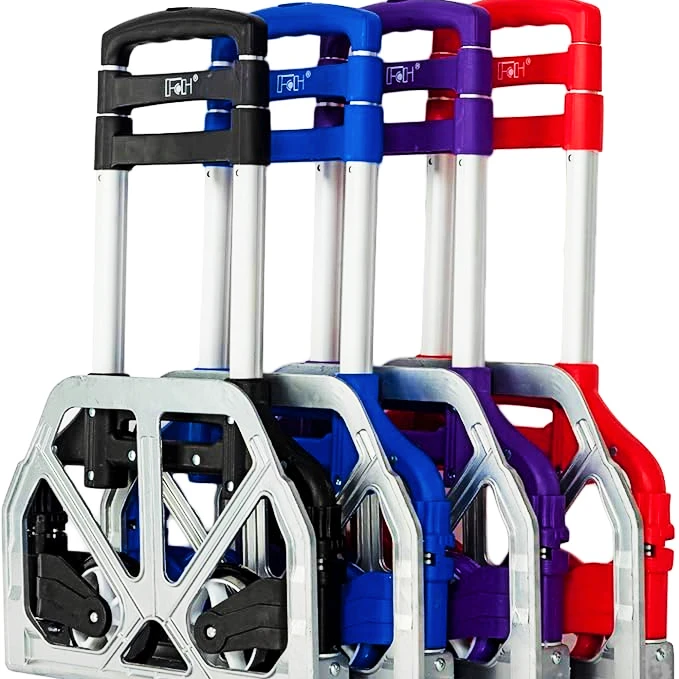
FCH Folding Hand Truck Aluminum Portable Folding Hand Cart
The FCH folding hand truck is your ultimate partner for effortless transport. Its telescoping handle adjusts instantly, while durable, rust-proof construction smoothly carries up to 165 lbs. Lightweight and compact, it folds to a slim 2-inch profile for easy storage. Ideal for moving your water storage cubes.
Thoughtful design, like the integrated handles on a WaterBrick, can also help by distributing weight evenly, allowing children and older adults to assist. By planning for portability, you transform water management from a solo burden into a safe, collaborative family effort.
Leak-Resistant Hardware : Caps & Spigots That Last
Build a reliable water storage system by starting with smart design. Choose containers with standard, replaceable seals and threads, making future repairs simple.
Begin with a quick sanitizing step using a mild bleach solution to ensure purity from day one. For long-term performance, look for features like internal spigot protection or durable silicone seals. A small maintenance kit with spare O-rings and food-grade lubricant empowers you to handle quick fixes. Remember to listen to your gear—a squeaking cap signals it’s time to stop, clean, and re-seal to protect your investment for years to come.
Before first use, a simple cleaning step is essential: disinfect all threads and seals with a solution of one teaspoon of unscented bleach per quart of water, letting it contact the surfaces for at least two minutes (CDC 2024).
Food-Grade Materials : Reduce Leaching Risks the Right Way
Selecting the right container is the first step to ensuring your emergency water supply remains safe for the long term. To minimize the risk of chemical leaching, it is crucial to use containers made from food-grade materials, a principle strongly supported by public health authorities (CDC, 2024; EPA, 2024). Look for high-density polyethylene plastic clearly marked with a #2 recycling symbol and labeled as “drinking-water safe.”
For the highest assurance of safety, seek out containers that carry NSF/ANSI Standard 61 certification. This certification verifies that the product materials meet strict limits for heavy metals and chemical migration, ensuring they are safe for drinking water (NSF, 2025). A trustworthy manufacturer will provide a certificate number; be cautious of products that only state “tested to NSF 61” without this verifiable number, as this claim may be unsubstantiated (Consumer Reports, 2025).
Use Purpose Built: Don’t use old milk jugs
It is also important to use purpose-built water containers. Repurposing old milk or juice jugs is not recommended, as residual organic materials can promote bacterial growth and degrade the plastic, leading to leaks and contamination (CDC, 2024). While dedicated water cubes can last for a decade, recycled containers often become brittle and crack within months.
Verification Tip: When purchasing, you can confirm a product’s certification by checking the manufacturer (such as WaterBrick, Reliance, or Scepter) directly in the official listings on NSF.org (NSF, 2025). Look for the exact product and make sure that the entire system is certified not just some components.
Pro Tip: “BPA-free” does not equal certified. Praeparium recommends using certified products.
Rotation & Cleaning: A Ten-Minute Routine You’ll Actually Follow
The most reliable way to maintain your emergency water supply is to integrate a simple, consistent routine.
A straightforward cycle of sanitizing, filling, labeling, and rotating is all that is required to ensure your water is always safe and fresh. Begin by sanitizing your container with a solution of one teaspoon of unscented bleach per quart of water, ensuring it contacts all surfaces for at least two minutes before a thorough rinse, as recommended by the CDC (2024). After rinsing, fill the container with drinking water and clearly label the lid with both the fill date and a six-month replacement date.
To make this practice effortless, tie it to an existing bi-annual event, such as the clock changes for Daylight Saving Time. This method, often called a “cube-check,” creates an easy-to-remember schedule that also reminds everyone in the household where the supplies are located. For optimal water quality, always store your containers in a cool, dark place, ideally below 70°F (21°C) and out of direct sunlight (CDC, 2024). Finally, as part of this routine, make a habit of inspecting your water. If you ever notice an unusual odor or color change, discard the water. It is important to remember that taste is not a reliable safety test.
Top Picks Compared Capacity, Hardware & Parts Availability
Our selection of stackable water cubes was guided by a commitment to safety, value, and practicality. The foremost criterion was certification; we prioritized containers made from BPA-free, food-grade HDPE (#2 plastic) with official NSF/ANSI 61 or FDA certifications to guarantee material safety for long-term water storage. Secondly, we evaluated price to ensure a competitive cost-per-gallon, delivering durable quality without premium markups. Finally, we assessed real-world usability—features like secure, leak-proof seals, integrated handles for portability, and a genuinely stackable design that saves space. This balanced approach ensures our recommended cubes are a safe, affordable, and smart foundation for any preparedness plan.
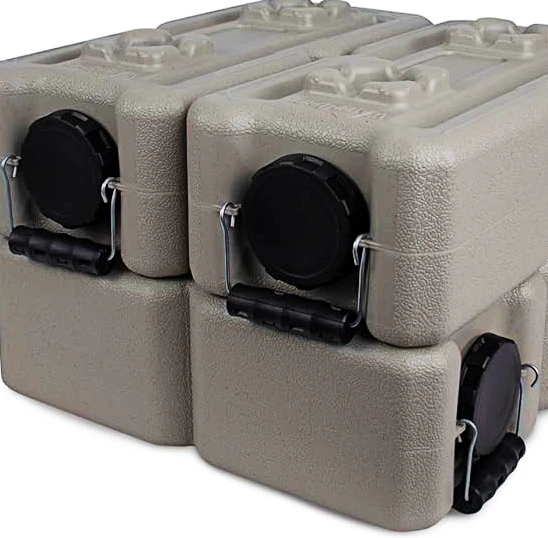
WaterBrick Water Storage Containers for Emergency Water Storage
WaterBrick containers are versatile 3.5-gallon storage units, designed to stack like bricks for space-efficient storage in closets, garages, or RVs. Made in the USA from BPA-free, food-grade plastic, they safely store water, food, or supplies. Each unit features a convenient handle and a wide opening for easy access. Their robust, stackable design allows you to build stable storage up to four feet high, making them an ideal, multi-purpose solution for preppers, campers, and families looking to build a compact and reliable emergency reserve.
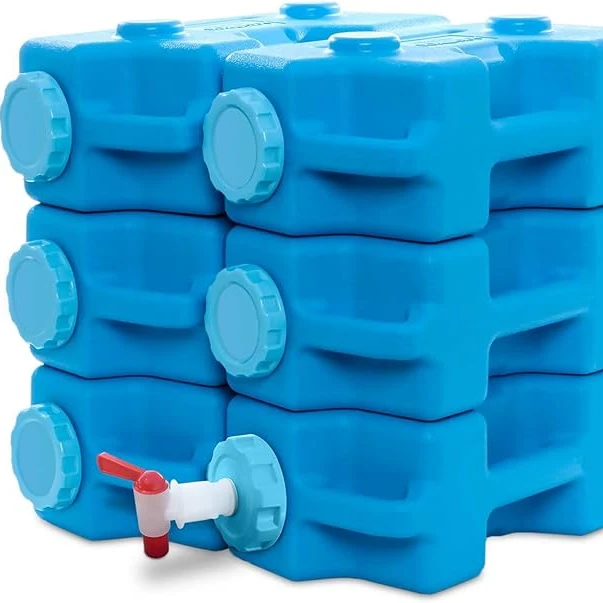
AquaBrick 3 Gallon Long Term Water Storage Container
The AquaBrick is an ideal, multi-purpose container for emergency preparedness. With a 3-gallon capacity for water or space for 20 lbs of dry goods, its 100% leak-proof and stackable design maximizes any storage area. Easy to fill, carry, and clean, it empties completely without waste. This versatile and reliable brick-shaped container is the perfect foundation for an organized, long-term water and food storage system, ensuring you are well-prepared for any situation.
When Cubes Aren’t Ideal : Know When to Scale Up
Building a resilient water supply is a journey, and the good news is that there’s a perfect strategy for every home and budget. For apartments or short-term situations, stackable cubes are the undisputed champions of space efficiency and portability. But for large families or preparing for extended outages, scaling up with bulk storage is the key to true peace of mind.
Think of it as building a water “safety ladder.” A single 55-gallon drum, securely placed in a garage, provides a crucial two-week reserve for a family’s minimum needs (FEMA 2025). You can instantly boost this capacity by pairing it with a bathtub liner, like a WaterBOB, to capture up to 100 gallons when a storm warning is issued. The wisest approach is to mix these methods: use portable cubes for daily kitchen use, rely on economical drums for your core reserve, and have a certified filter on hand to purify found water.
Start by securing your first 72 hours, then confidently climb your ladder to a two-week supply and beyond (FEMA 2025). This layered strategy is the core of the Praeparium approach and ensures you’re not just prepared, but intelligently prepared for any situation. For a detailed roadmap on creating your custom system, don’t miss our comprehensive guide: Emergency Water Storage (2025).
Frequently Asked Questions: Clear Up Common Water Storage Mistakes
How many cubes should I store?
Plan on 2 gallons (7.6 L) per person per day for two weeks if space allows (CDC 2024; FEMA 2025; WHO 2024).
Can I stack them higher than three?
Manufacturers limit stacks to three to avoid deformation. If you want to go higher, use a wood frame or pallet for support.
Do I need to re-treat factory bottled water?
No. Factory-sealed water remains drinkable if stored cool and dark (CDC 2024).
What if a cube smells like plastic?
Rinse with 1 Tbsp baking soda per gallon of water and air-dry for 24 h. Persistent odor can indicate non-food-grade plastic.
Can I fill with rainwater?
Only if filtered and disinfected using EPA emergency methods (EPA 2024). Check out our guides on Emerrgency Water Storage (2025) and Emergency Water Treatment
Other Water Prepping Articles by Praeparium
55-Gallon Drum Setup (2025): Safe Bulk Storage for Households
PFAS & Lead: Choosing Certified Filters

Emergency Water Treatment (2025): Store, Treat, Filter

Bathtub Water Bladders for Short-Notice Events (2025)
Emergency Water Preparedness (2025)

Author note — Why you can trust our guidance
Praeparium’s Water Preparedness Editors bring together technical research, field experience, and standards-based evaluation to deliver clear, practical, and trustworthy guidance. Our team reviews water storage containers, filtration systems, chemical treatments, and emergency protocols using authoritative sources including CDC, EPA, FEMA, WHO, and NSF/ANSI performance standards.
We focus on real-world usability: how much water households actually need, how containers perform under long-term storage, how filters behave across microplastics and protozoa, and how treatment options compare under stress conditions. Recommendations are selected independently; we do not accept payment, samples, or placement fees from manufacturers. Every pick must meet transparent criteria for safety, reliability, and value.
Praeparium’s water editors are committed to responsible preparedness: mainstream, non-alarmist, evidence-led, and tailored to help families build resilience one safe step at a time.
Sources
Centers for Disease Control and Prevention (CDC). “Preparing and Storing Safe Water During an Emergency.” Last modified June 27, 2024. https://www.cdc.gov/healthywater/emergency/drinking/emergency-water-supply-preparation.html.
Consumer Reports. “How to Choose a Water Filter for Your Home.” January 2025. https://www.consumerreports.org/water-filters/how-to-choose-a-water-filter.
Federal Emergency Management Agency (FEMA). “Water & Food Safety in Emergencies.” Ready.gov, 2025. https://www.ready.gov/water.
NSF International. “NSF/ANSI Standard 61 – Directory Listing Portal.” Accessed May 2025. https://www.nsf.org/certified-products-systems.
U.S. Environmental Protection Agency (EPA). “Emergency Disinfection of Drinking Water.” EPA Office of Water, 2024. https://www.epa.gov/ground-water-and-drinking-water/emergency-disinfection-drinking-water.
World Health Organization (WHO). “Technical Notes on Drinking-Water, Sanitation and Hygiene in Emergencies (Technical Note No. 9).” Geneva: WHO, 2024. https://www.who.int/water_sanitation_health/hygiene/emergencies/techbriefs/en/.
Pingback: 55-Gallon Drum Setup (2025): Safe Bulk Storage for Households - praeparium.com